
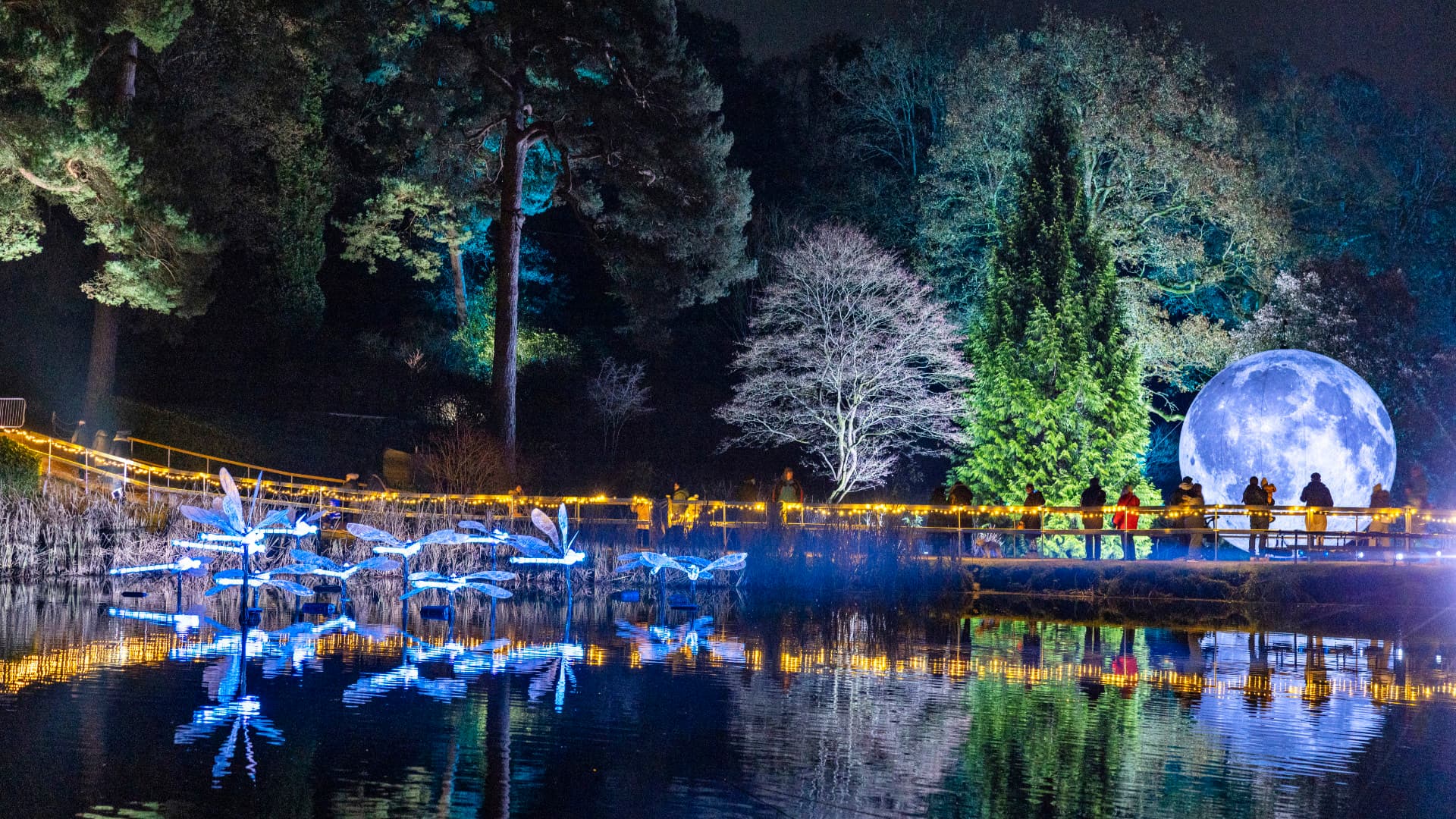


Leonardslee Lights is a winter illuminated trail through Leonardslee Lakes & Gardens — a Grade-I listed woodland garden near Horsham, lit and scored across a season of evening openings. It's designed and produced by Accord AV, the audio-visual specialists behind the staging, lighting and sound. M-Tech is their network partner: they bring the show, we build and run the infrastructure it rides on.
Behind the show is a network that has to behave like enterprise infrastructure outdoors, in a forest, in winter, with no second take once the gates open. We built it as pure Ubiquiti UniFi, end to end — the core, the switching, the outdoor Wi-Fi, the cameras and the power resilience are all Ubiquiti, run from a single controller. No mixed-vendor edge, one pane of glass for the whole estate.
The unusual part isn't that it's outdoor Wi-Fi. It's that this one UniFi fabric carries two real-time media protocols at once — Art-Net for the lighting and Dante for the audio — as production-critical peers on the same set of switches.
What an outdoor show network has to do
- Context:
Two real-time protocols, one fabric — Art-Net lighting control and Dante audio are both latency- and timing-sensitive, and both have to run cleanly on the same network without interfering with each other
- Issue:
No second chances — the trail opens to ticketed visitors on a schedule. A network fault mid-show isn't a ticket for tomorrow; it's a dark scene or silent zone in front of paying guests, on the night
- Context:
Enterprise behaviour, outdoor reality — a listed woodland garden in winter: distance, weather, trees in the signal path, and power that has to be clean and held up at every node
- Goal:
A backbone for the creatives — the lighting designer and the show consoles need the network to be invisible: predictable, low-latency, and there. The infrastructure should never be the thing anyone's thinking about
- Context:
More than the show — operational Wi-Fi for the production team in key locations, plus CCTV coverage of the site, all on the same managed platform
How the network is built
The spine of the show is a fibre-aggregated UniFi core, with several kilometres of fibre run out across the gardens to distribution points deep in the grounds. Aggregating at 10 gigabit gives the headroom for two real-time media protocols to share the fabric comfortably — and the headroom to grow without re-architecting.
Every layer is Ubiquiti — core, switching, access points, cameras and power — managed from a single UniFi controller. No bolt-on boxes from other vendors at the edge, which is exactly why the whole estate reads as one coherent, observable platform rather than a stack of systems that don't talk to each other.
Lighting control (Art-Net) and audio (Dante) ride the same UniFi switching, segmented and prioritised so each protocol gets the clean, time-sensitive transport it needs. One network, two production-critical real-time worlds, coexisting.
Weatherised outdoor access points provide Wi-Fi where the production team and operations need it across the site — coverage designed for an open, wooded environment rather than an office floor.
Site CCTV runs on UniFi Protect, on the same managed platform as the rest of the estate — one pane of glass for the network, the cameras and the access points, rather than three separate systems.
Each distribution node sits behind its own UPS, so a brief power dip in a far corner of a winter garden doesn't drop a switch — and a dropped switch doesn't drop a scene. PoE delivers power and data to the edge over single runs.
The platform is instrumented from day one — UniFi's own controller for live visibility, plus independent third-party monitoring watching uplinks, port health, PoE delivery, latency and packet loss, so anomalies surface before they reach the show.
When the gates open, the show has to work, and there's no second take. M-Tech don't just build us a network and walk away; they monitor it for us every show night, so we can get on with the lighting and the sound. They're the solid foundation everything else stands on.
A clean division of labour
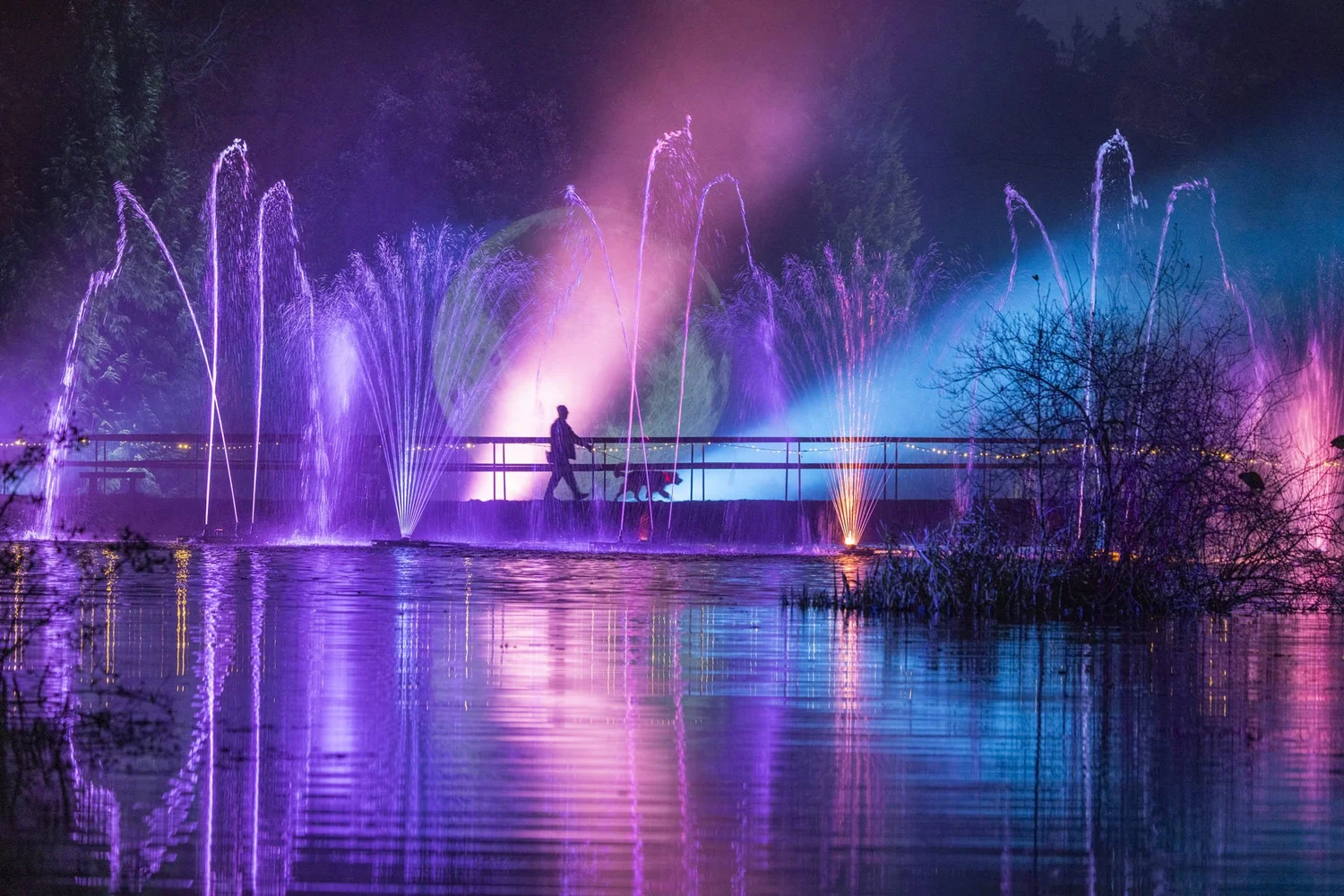
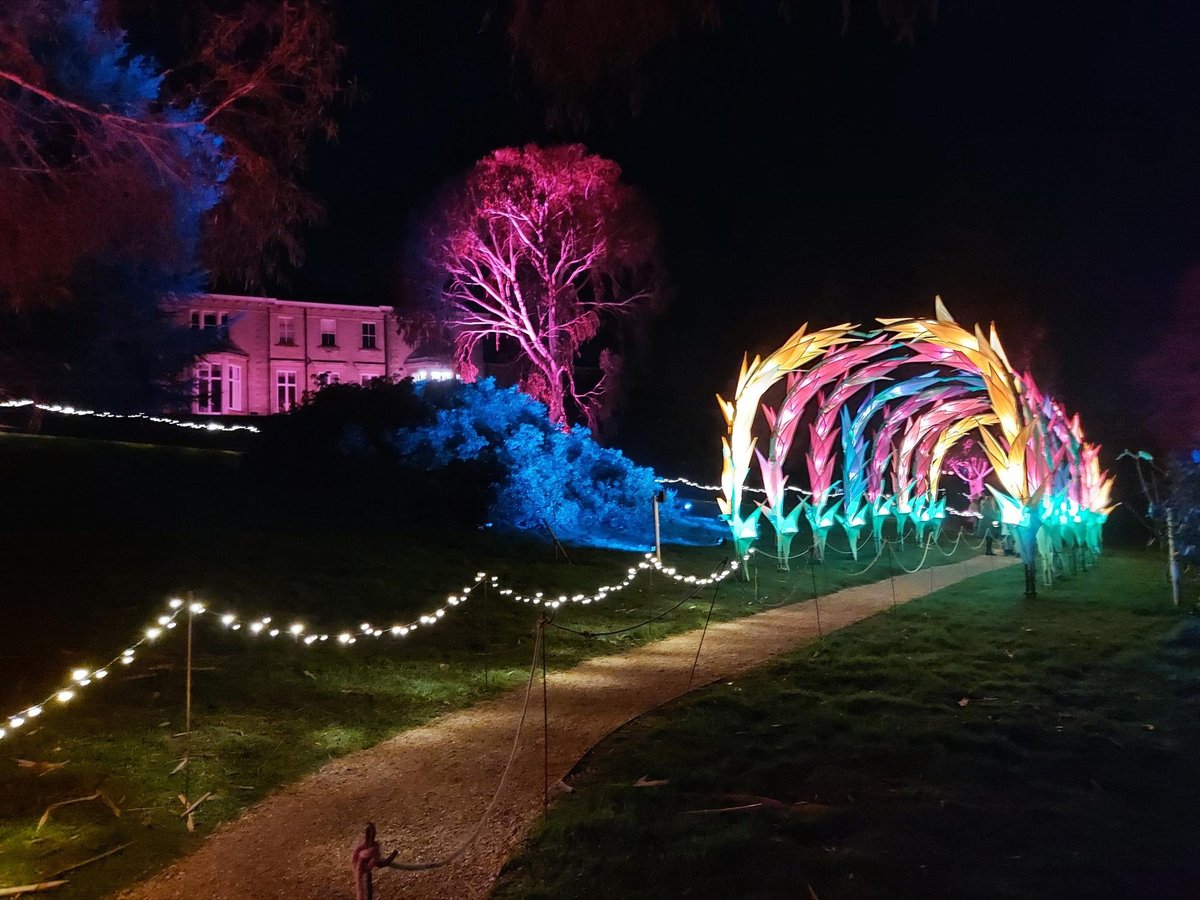
Accord AV design and run the staging, lighting and sound — the creative and production layer that visitors actually come to see. M-Tech designs, builds and runs the network it all rides on. The line between the two is deliberately clean: Accord AV own the show; we own the fabric underneath it, so they can focus on the lighting and the audio rather than the switches.
It's a relationship with a track record. The same two teams stand up the temporary festival network at Chiddfest each year — a green field turned into a resilient, secure event network and back again in a weekend. Leonardslee is the other end of the spectrum: a fixed, seasonal installation in a listed garden. Very different events, the same dependable foundation underneath.
You can find Accord AV at accordav.co.uk.
Running it on the night
A show network is only as good as it is on the night it matters. Across the season's evening openings, the platform is monitored live and supported under a defined response model — proactive monitoring during every show, remote triage and remediation when something needs a hand, and on-site attendance when it can't be fixed from the dashboard. Spare switching and access points are held locally for rapid hot-swap, so a hardware failure is a swap, not a write-off.
The exclusions are honest, too: M-Tech runs the network. The lighting and show-control hardware on top of it is Accord AV's domain — the fabric carries it, cleanly, but the creative kit is theirs.
Scaling deeper into the forest
The first season proved the model: a single Ubiquiti fabric carrying lighting control and audio as real-time peers, production-stable, across a full run of show nights. The next season scales it.
- Goal:
Twice the footprint — the network roughly doubles in scope, extending from the top of the site down into the forest, with more endpoints and more terrain to cover
- Context:
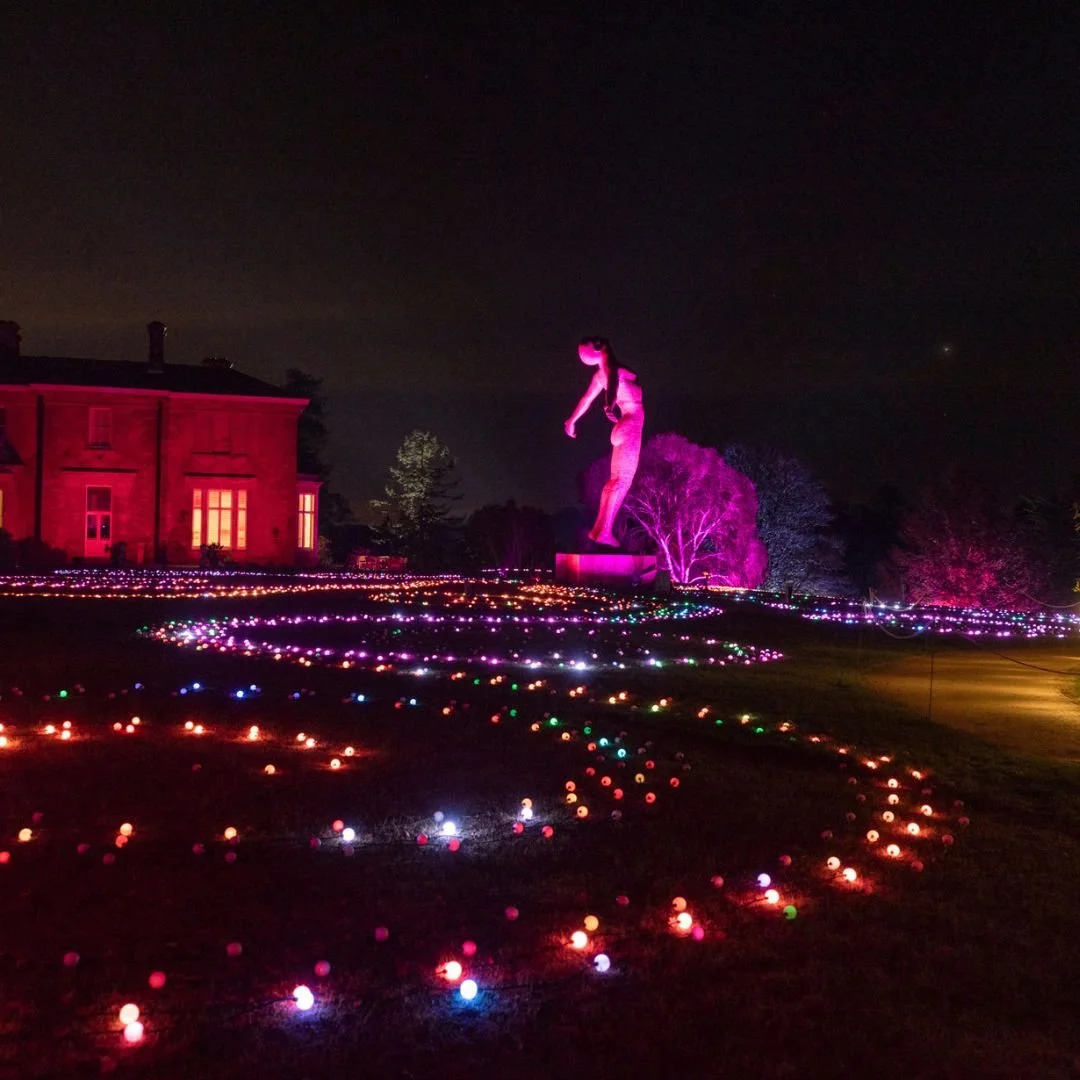
More show on the same fabric — additional production systems join, including a computer-controlled laser show over the lake, riding the same Ubiquiti infrastructure rather than a parallel network
- Issue:
The hard parts get harder — more endpoints across more ground means higher multicast density, tighter clock-distribution demands for Dante and Art-Net, and more environmental and RF risk to design out. The architecture built in year one is what makes year two a scale-up, not a rebuild
Why this one's worth telling
Unconventional, on purpose
Dual real-time media protocols — lighting control and audio — coexisting on a single unified UniFi fabric is not the textbook use of the gear. It works because it was designed to, and it's run that way every show night.
Operational proof, not theory
A full season of ticketed evenings, monitored live, supported under SLA. The evidence is the show running — not a slide claiming it could.
A before-and-after at scale
Stable operation at baseline, then a planned doubling of footprint with added show control on the same infrastructure. The interesting engineering is in growing it safely, not standing it up once.
Pure UniFi, end to end
Core, switching, outdoor Wi-Fi 7, Protect CCTV and power resilience — all Ubiquiti, all run from one controller, with several kilometres of fibre underneath. An unusually complete, high-load showcase of what the UniFi platform can carry when it's the whole stack, not just the Wi-Fi.
At a glance
- Client
- Leonardslee Lights, delivered with AV partner Accord AV
- Venue
- Leonardslee Lakes & Gardens, Lower Beeding, West Sussex (Grade-I listed garden)
- Event
- Winter illuminated trail — a full season of evening openings
- Network
- Pure Ubiquiti UniFi, end to end — 10-gigabit fibre-aggregated core, several kilometres of fibre run across the site, one controller, no mixed-vendor edge
- Real-time media
- Art-Net lighting control and Dante audio carried as peers on the same switching
- Wireless
- Outdoor Wi-Fi 7 across the gardens for production and operations
- Security & surveillance
- UniFi Protect CCTV on the same managed platform
- Power
- Per-node UPS resilience; PoE to the edge
- Monitoring
- UniFi controller plus independent third-party monitoring, live every show night
- Support
- Proactive monitoring, remote triage and on-site attendance under a defined response model; local hot-swap spares
- Next season
- Network footprint roughly doubling into the forest, plus a computer-controlled lake laser show on the same fabric
- Distinctive
- Two production-critical real-time protocols on one end-to-end UniFi fabric — unconventional, high-load, show-proven