

Foundry is a UK coworking and flexible-workspace operator established in 2022 as a joint venture between Adam Walker and Legal & General. The model takes underused or underperforming real estate — often town-centre or mixed-use — and turns it into design-led workspace for freelancers, start-ups, growing companies and established local businesses. Not just desks and meeting rooms; destinations where people work, meet, collaborate, host events and belong to a wider business community.
That model places unusually broad demands on technology. Members join and leave. Companies grow and move between spaces. Meeting rooms turn over hour by hour. Visitors need access without creating security gaps. Wi-Fi has to work for thousands of devices nobody owns. CCTV, access control, audio, AV, connectivity and the operator's own business IT all have to operate together — and when any of those layers fails, the member experience is affected immediately.
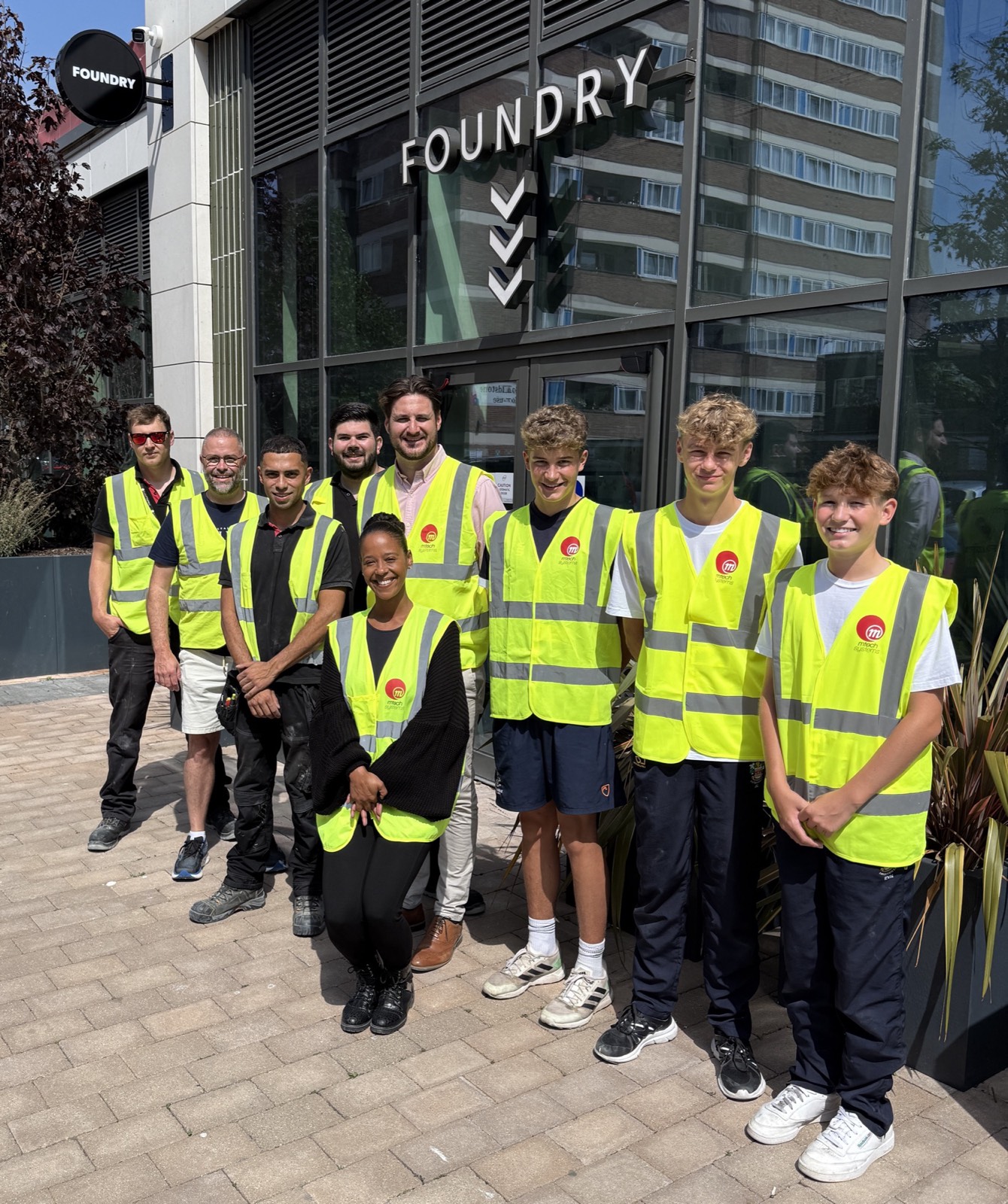
Our relationship with Foundry began with a comparatively simple ask — they needed Wi-Fi. It quickly became clear the business needed a technology partner capable of supporting the physical environment, the member experience, the operational systems and Foundry's own internal IT. That breadth has been the defining feature of the relationship ever since.
What coworking technology actually has to do
- Context:
Wi-Fi is a primary service, not a convenience — high-density, high-churn device mix that punishes anything designed for a static office floorplate
- Goal:
Access control has to follow the member — entry rights tied to membership status, bookings, time of day and policy, not to a static keyfob list
- Issue:
Audio and AV in chargeable rooms — paid meeting space is undermined the moment a screen-share takes ten minutes to connect
- Context:
Internet availability is product-critical — a coworking site full of paying members can't tolerate the kind of short outage a conventional office shrugs off
- Issue:
Supplier fragmentation becomes the operator's problem — gaps between cabling, network, AV, security, MSP and integration suppliers turn into member-facing friction
Members shouldn't need to understand the network design, the access integration or the failover architecture. They should just experience fast Wi-Fi, easy room use, smooth entry, reliable collaboration, appropriate background audio and a safe environment.
How the model has matured, site by site
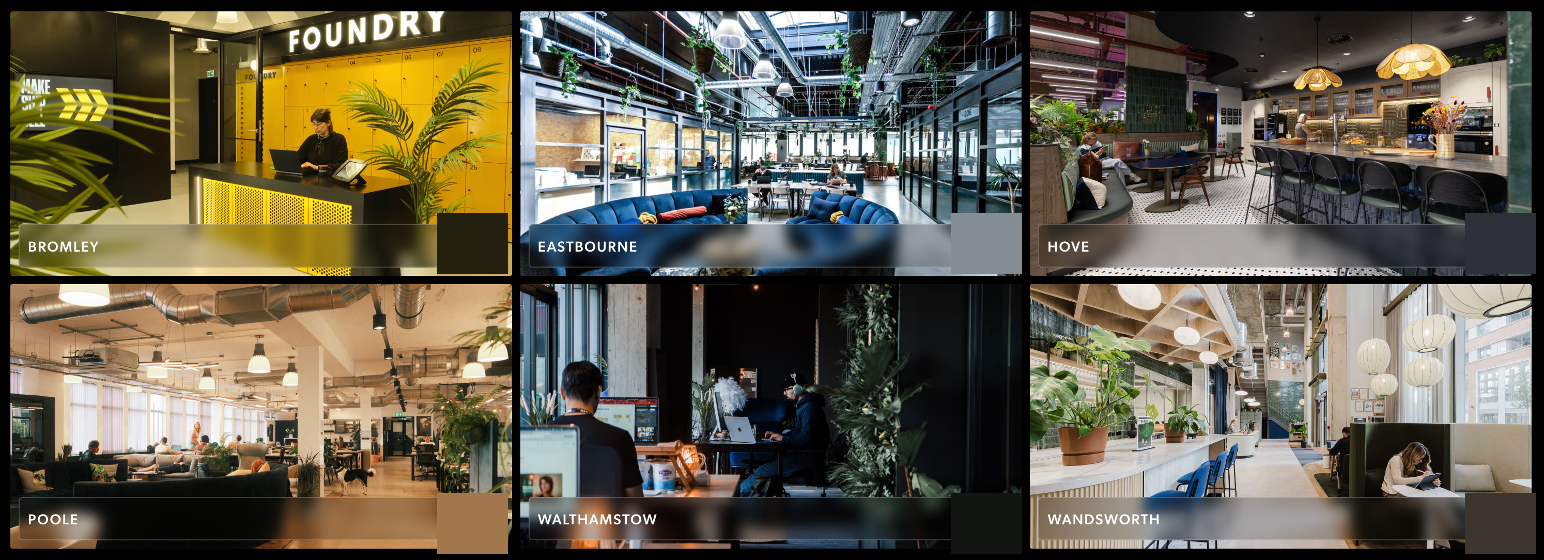
The platform has evolved through six live sites — first proving the operating model, then standardising it, then stretching it to a different building type.
Eastbourne
First Foundry site, in The Beacon shopping centre. We came in late in the build, so the team had to be nimble — switching, Wi-Fi, firewalling and connectivity delivered around active contractors. Surrounding systems followed under our managed model.
Poole
Engaged earlier in the build, with greater ownership of the technology design. Networking, firewalling and managed support landed in step with the construction programme. AV consistent from the start, not bolted on at the end.
Walthamstow
The first-generation pattern proven beyond Foundry's local geography. Networking and scheme technology delivered while the operating model continued to mature, and the playbook for repeat delivery sharpened with every site.
Wandsworth
AI-driven enterprise wired and wireless. Cloud access control integrated with the workspace management system. AI-assisted video security, professional IP audio and simple wireless collaboration displays — designed as one stack, not a catalogue of products.
Hove
The clearest expression of the standard stack to date. Resilient internet via diverse local-loop carriers on our own ISP core. Targeted intruder and panic alerting in the gym. AI-driven Wi-Fi across the whole site. And — yes, really — the disco toilet.
Bromley
The most recent site, in Crayfields Business Park. A different building type from the city-centre coworking pattern — light industrial workshops alongside private offices for teams of 2–12. Full standard stack day one, plus automated roller doors and industrial building management.
In parallel, we're bringing the first-generation sites into line with the current standard — AI-driven enterprise Wi-Fi has already been retrofitted into Eastbourne, Poole and Walthamstow with a marked uplift in performance. The aim is for the estate to behave as one platform, not six one-offs.
What we delivered
High-density Wi-Fi at coworking density — the wireless standard across the estate is Juniper Mist, AI-driven and cloud-managed across every site. Combined with managed switching, it's the single biggest reason day-to-day Wi-Fi complaints have dropped to almost nothing.
Diverse local-loop carriers presented as one coherent network. Failure of a single carrier or physical route doesn't have to take a site offline — which matters when internet availability is part of the product.
Mature security at the network edge. Combined with intelligent access-layer management, gives the kind of segmentation a multi-tenant workspace actually needs.
Doors integrated with the workspace management platform — entry rights linked to membership status and bookings rather than administered by hand.
People detection and advanced video analytics for safeguarding, after-hours awareness and faster incident review. Deployed on new sites and retrofitted into the earlier estate.
Wired, zoned, centrally controlled audio delivered over the structured cabling — replaces unreliable consumer-style systems that depended on Wi-Fi for speaker connectivity.
Plug an adapter or share wirelessly from any device, and the screen appears. Meeting rooms are paid, time-sensitive spaces — the first ten minutes of a booking shouldn't be spent fighting an HDMI cable.
Brand-aligned screens across reception, social and front-of-house spaces — content scheduled centrally and updated remotely across the estate. One brand voice, on-brand artwork, day-part scheduling and site-specific messaging, all managed from one console.
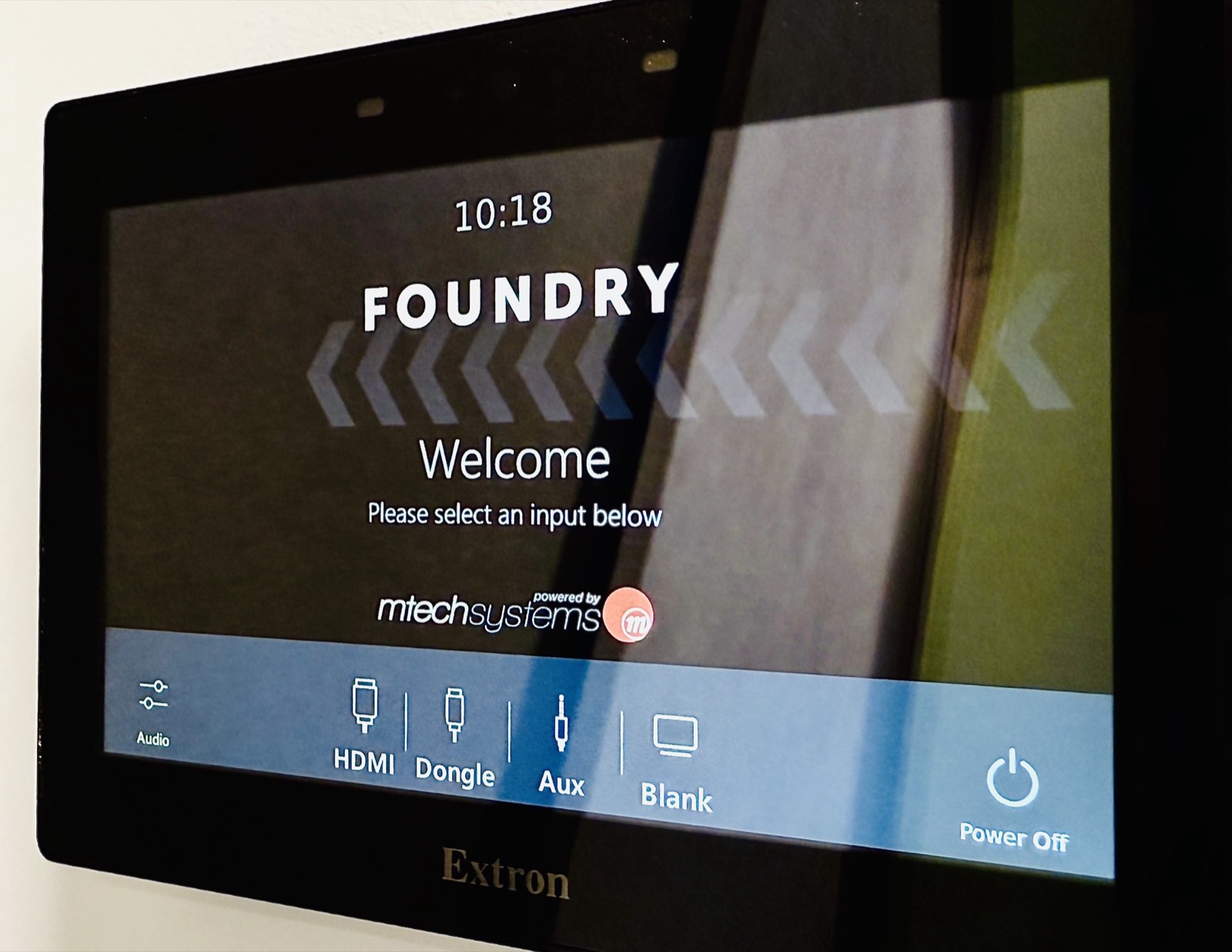
For the showpiece spaces — the Breakwater suite at Eastbourne and the state-of-the-art meeting room at Hove — a fully integrated Extron control architecture, managed display environment and client-branded touch interface. Engineered, not bolted together.
Productivity, identity, MFA, Conditional Access and managed endpoint detection and response across Foundry's own staff environment — the business IT, not just the scheme technology.
Foundry's device estate is moving towards a more standardised Apple fleet, managed properly with specialist Apple device management and endpoint protection — not as exceptions in a Windows-centric model.
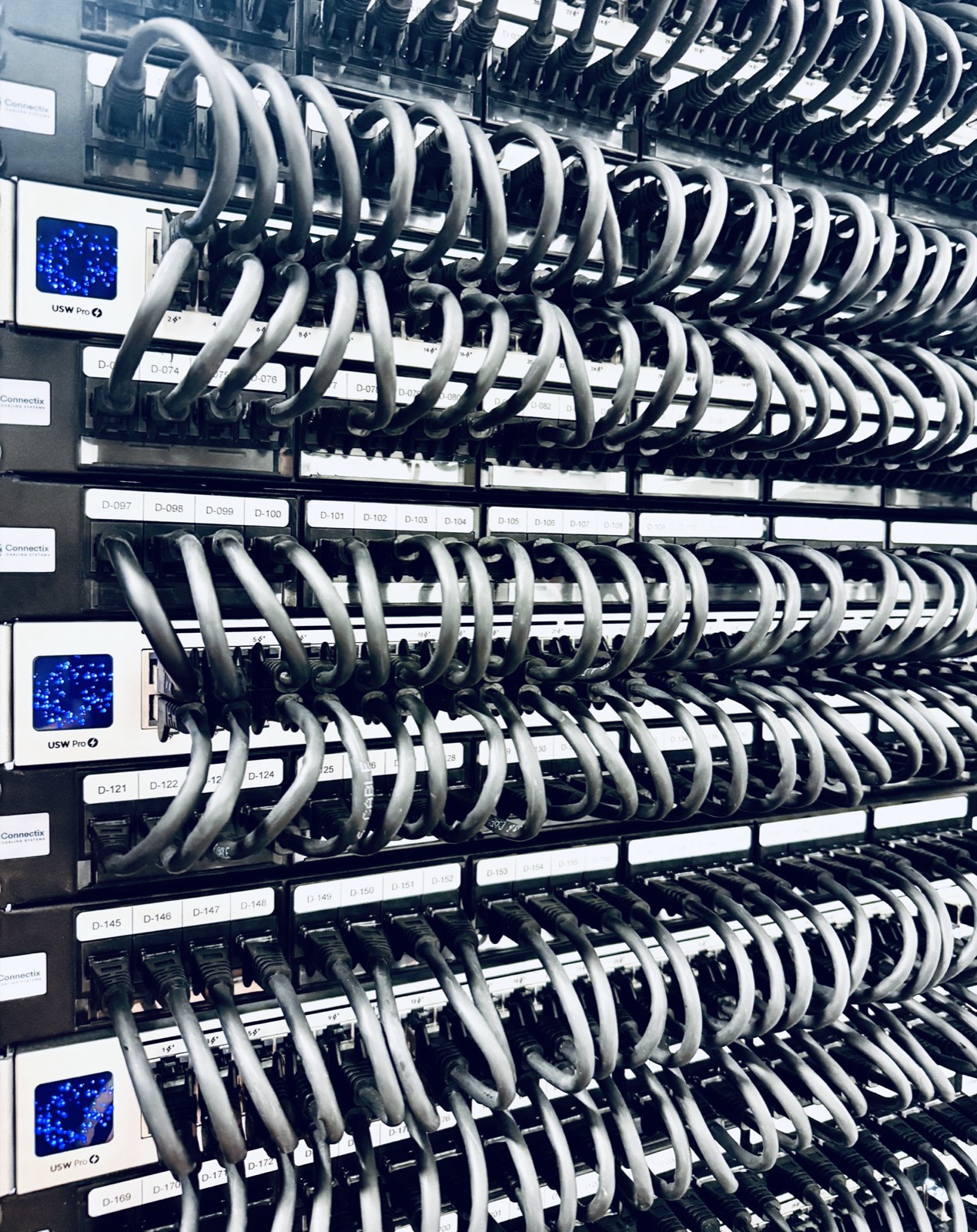
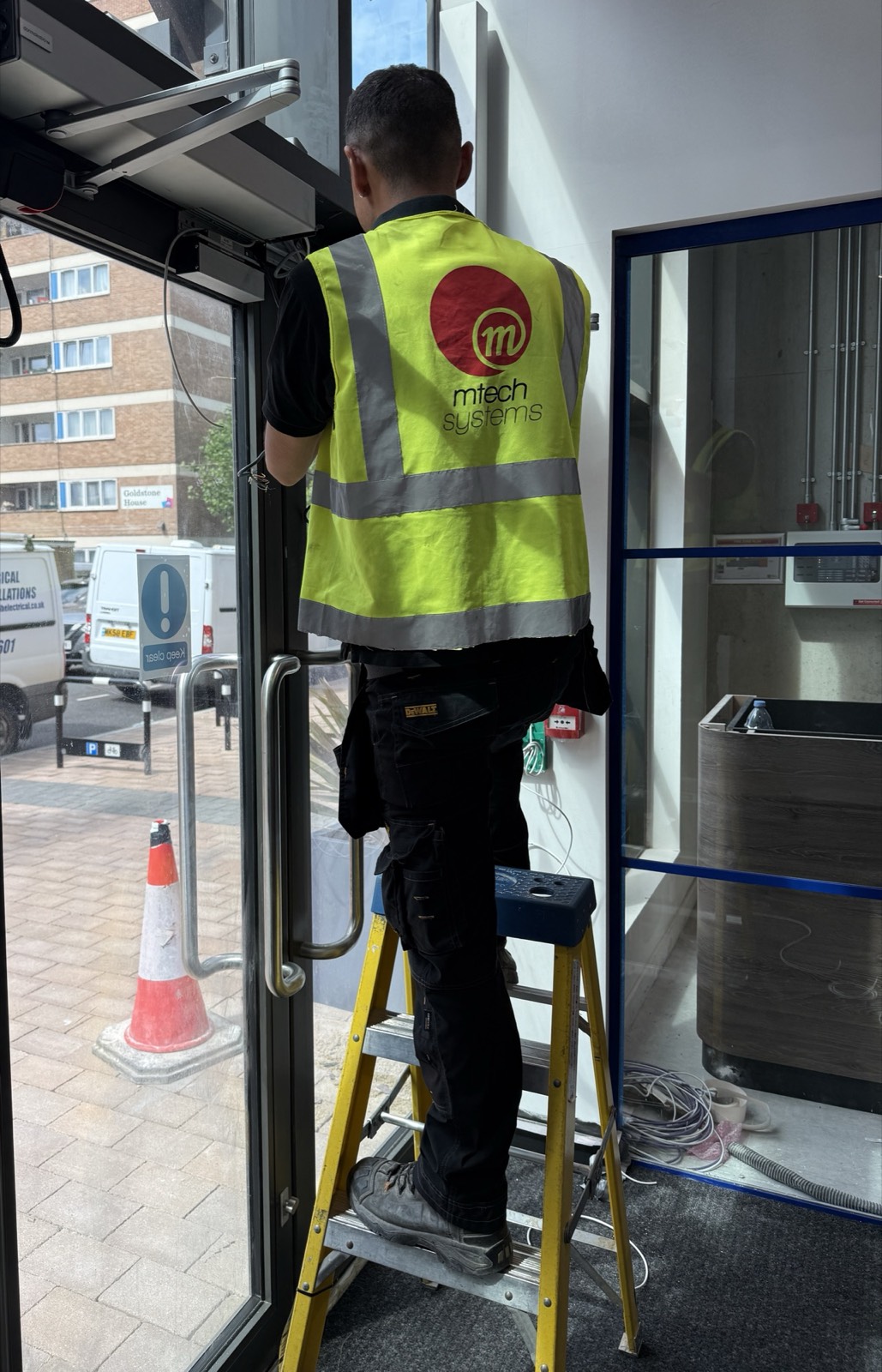
Wi-Fi at coworking density
Coworking is one of the harder deployment classes in commercial Wi-Fi. The device count per square metre is several times what a comparable office floor would carry. Almost none of those devices are owned or managed by the operator. The population turns over every day. And a meaningful share of those people are on a video call at any given moment. Most enterprise Wi-Fi designs assume a known device estate on a stable floorplate — neither of those holds in a Foundry building.
That's why the standard across the FOUNDRY estate is Juniper Mist — an AI-driven, cloud-managed wireless platform. The AI side matters here in a specific way: Mist continually measures the actual experience each individual client device is getting (signal, throughput, jitter, roam quality), tunes channels and power in response, and surfaces problems as conditions on the floor rather than as alerts on a dashboard. For a multi-site operator with thousands of unowned devices, that's a different proposition from a generic SSID broadcast.
The reader-friendly version: a member joining a video call from the bar, walking up to a meeting room, and finishing the call from a hot desk on a different floor — that journey holds together on a properly tuned deployment in ways it rarely does on lighter-weight Wi-Fi builds. Wi-Fi complaints across the estate have fallen close to zero since the standard rolled in.
Specialist AV — beyond plug-and-play
The Eastbourne Breakwater suite and the state-of-the-art meeting room at Hove sit a long way past a typical AV setup. Both are fully integrated multi-screen event spaces — engineered systems, not off-the-shelf installs, designed, programmed and commissioned by certified specialists.
At the core is a complete Extron control architecture managing video distribution, audio and system logic, paired with a managed display environment that holds consistency across every screen and gives us remote support across the estate. Multiple screens, inputs and audio zones are controlled as a single platform rather than separate components.
A custom client-branded touch interface ties it all together — simple, intuitive control over what is in reality a highly sophisticated environment. Spaces reconfigure instantly between events, presentations and day-to-day operation, with no technical knowledge required.
The result is a clean, consistent, fully controlled environment that looks aligned to the Foundry brand and delivers a level of reliability and flexibility standard AV simply can't match.
M-Tech are a fundamental partner at FOUNDRY supporting us as we scale across the UK at pace. The multidisciplinary technical support and development we receive is first class, coupled with a straightforward transparent approach to doing business.
What changed
Reliability
AI-driven enterprise networking, mature firewalling, resilient connectivity and the replacement of unsuitable consumer-style systems have all contributed to a more dependable environment across the estate.
Member experience
Wi-Fi complaints have dropped dramatically. Meeting rooms are easier to use. Access is aligned with membership and bookings. Audio is reliable and properly controlled. Members feel the difference even when they never see the underlying design.
Operational simplification
Foundry's head of technology stays focused on strategy rather than being dragged into laptop, camera, door, Wi-Fi and meeting-room issues. We absorb the operational complexity that would otherwise sit inside the business.
Scalable platform
A clearer common standard plus a retrofit path for the earlier sites. New locations can be designed against known technology, known architecture and known operational processes — faster, more predictable, easier to support.
Platform at a glance
- Operator
- Foundry by Legal & General Real Assets — coworking and flexible workspace
- Sites supported
- Eastbourne, Poole, Walthamstow, Wandsworth, Hove, Bromley
- Standard
- AI-driven enterprise networking, cloud access control, AI-assisted video, professional IP audio, simple collaboration displays, cloud-managed digital signage, plus specialist multi-screen AV in showpiece spaces
- Building types
- city-centre coworking and flexible workspace, plus light industrial workshops + private offices at Bromley
- Connectivity
- Resilient internet over diverse local-loop carriers, on M-Tech's own ISP core
- Security
- Enterprise firewalling, M365 Business Premium with MFA & Conditional Access, managed EDR
- Devices
- Mixed Windows + Mac estate, moving to standardised Apple fleet under Apple-specialist MDM
- Wireless
- Juniper Mist — AI-driven, cloud-managed across every site
- Retrofit
- Mist Wi-Fi rolled into Eastbourne, Poole and Walthamstow — further alignment in flight
- Distinctive
- bespoke disco toilet at Hove (we designed and built it); automated roller doors and industrial building management at Bromley
In numbers — and counting
- 02 / 04Wi-Fi access points across the estate0
- 03 / 04AI-aware cameras0
- 04 / 04Network switches0
Cabling to cloud, one accountable partner
What started as a conversation about Wi-Fi has become an outsourced technology department. Cable in the wall through to cloud tenant, access reader through to booking-platform integration, physical trades through to software front ends — it all sits with one team, under one relationship. Most providers cover one end of that spectrum or the other. Running the full span in-house is unusual, and it's the reason the Foundry platform feels coherent rather than stitched together from a dozen suppliers.