
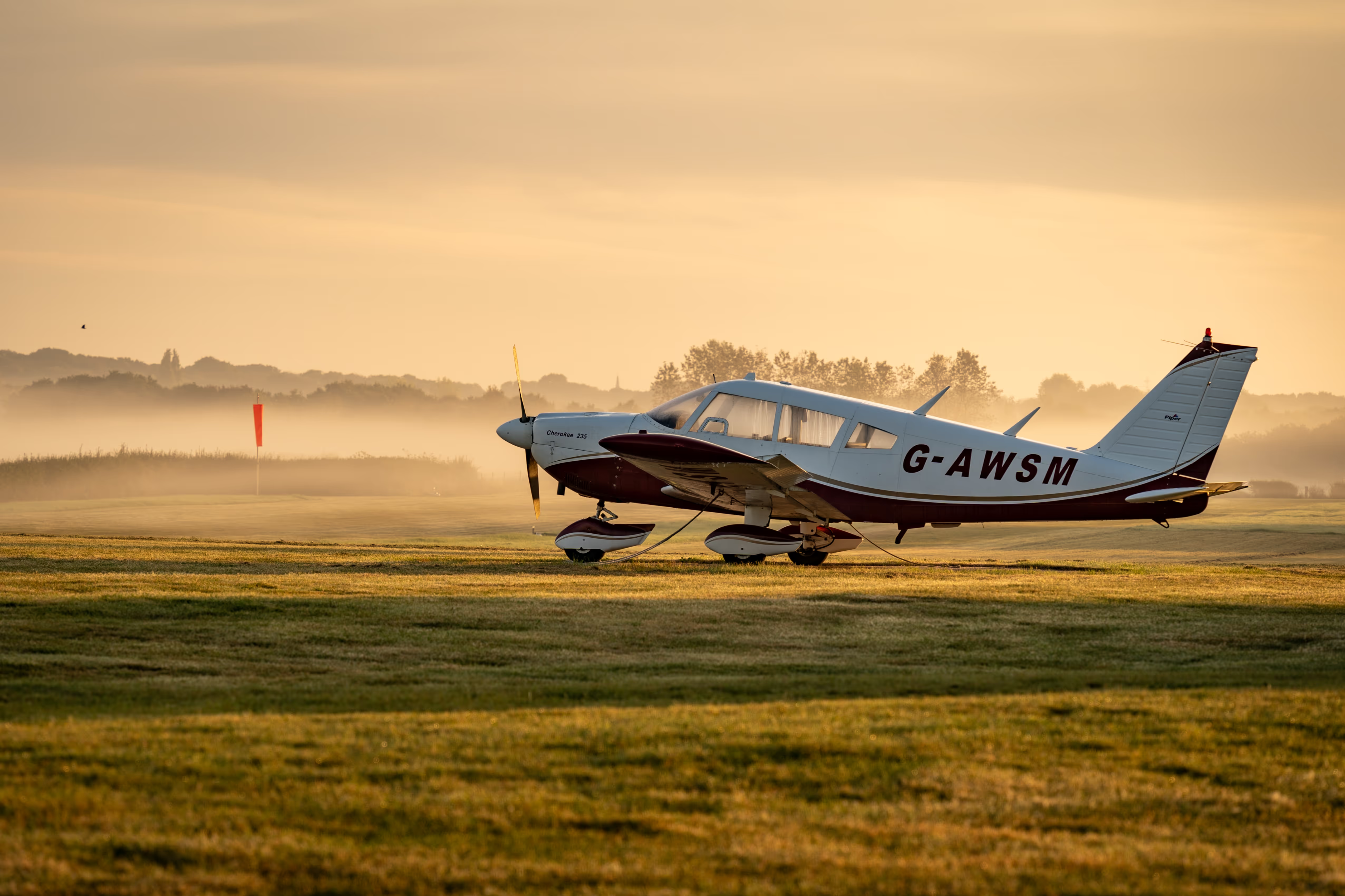

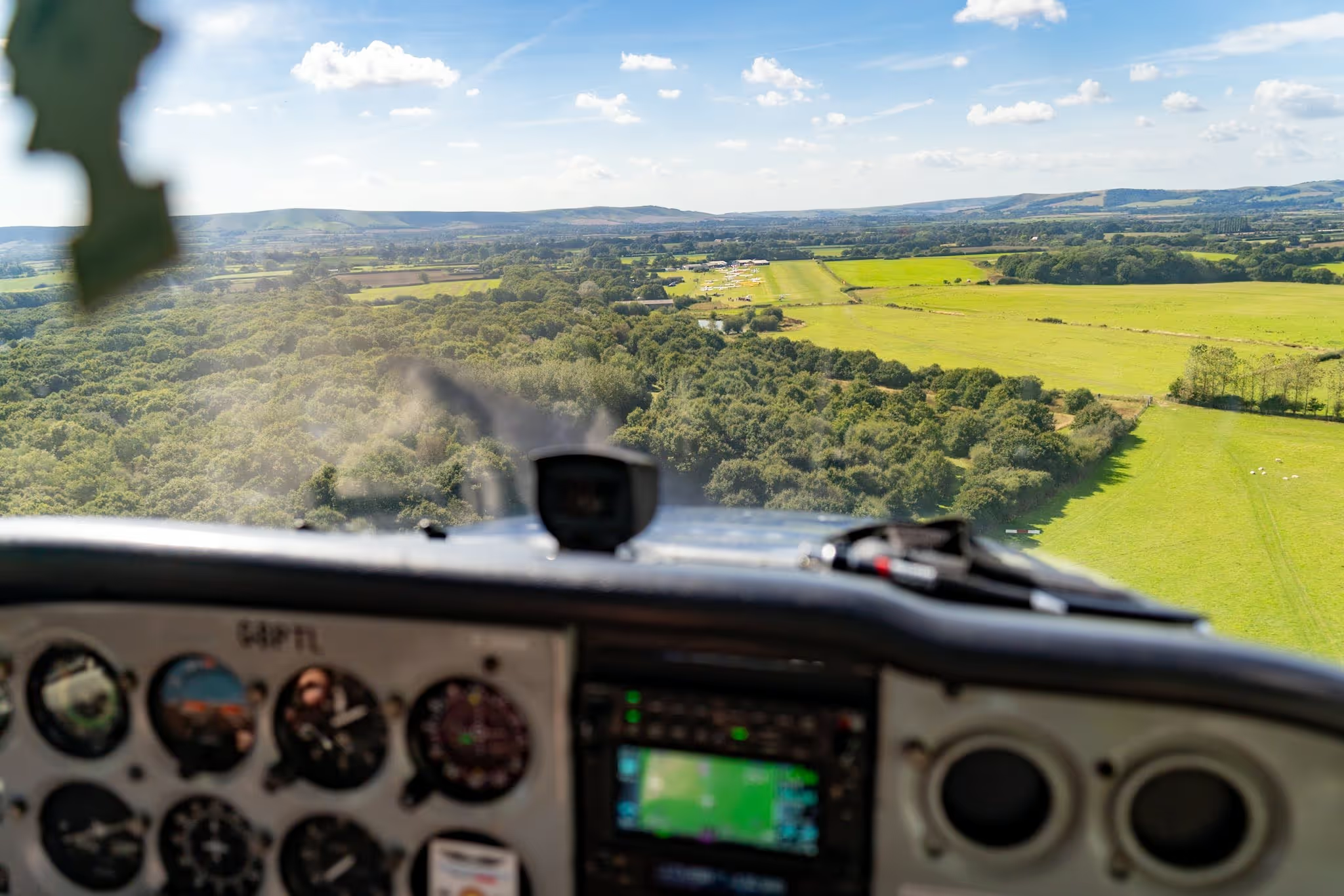
Deanland began life as RAF Deanland, a wartime fighter airfield in East Sussex. On the morning of 6 June 1944, the first Allied aircraft to take to the air on D-Day flew from Deanland — providing top cover over the Omaha and Gold landing beaches. Eight decades on, the same site is a working private airfield: sport flying, hangarage, visiting pilots, residents and the wider local flying community.
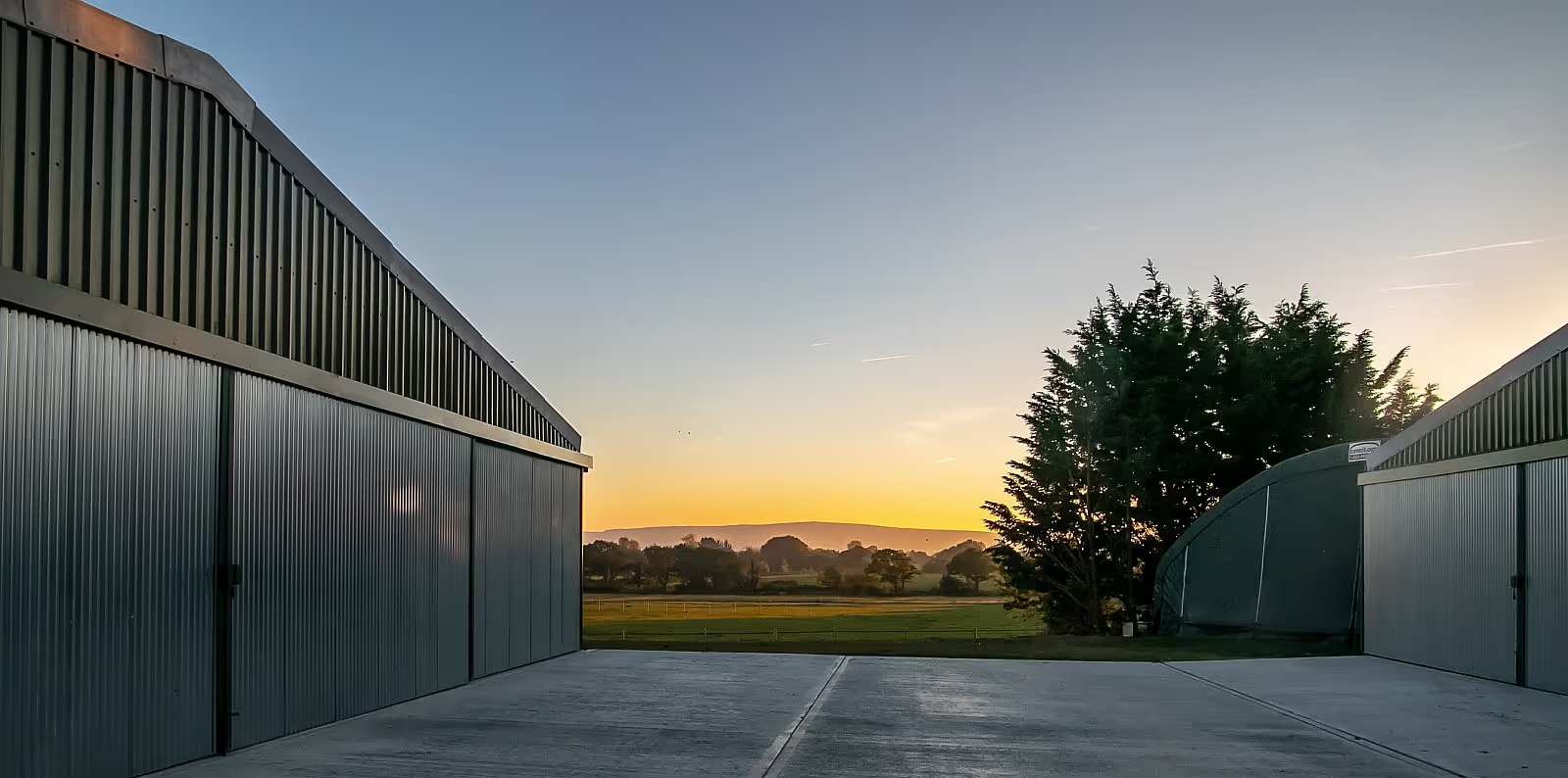
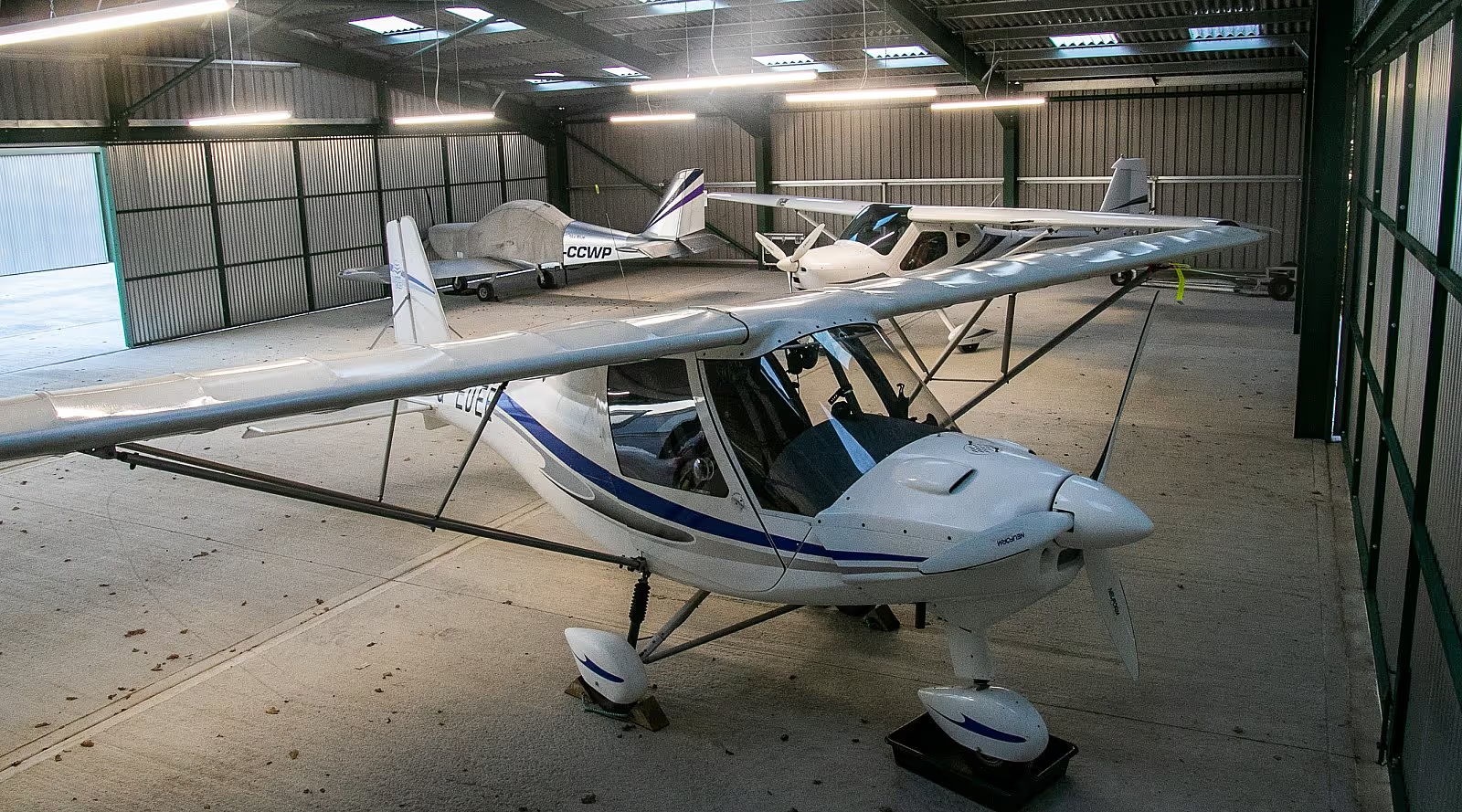
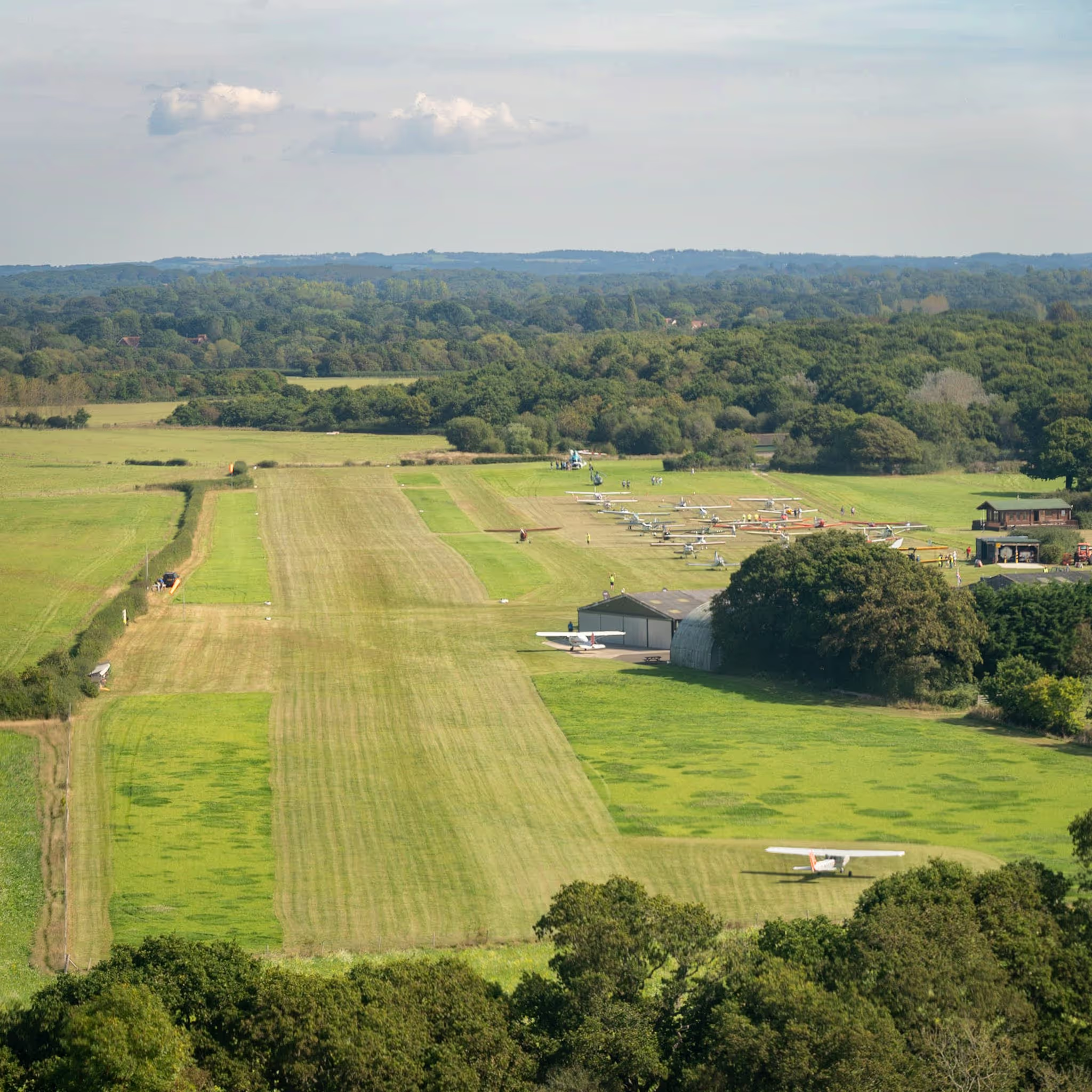
It is not a single building with a network rack. It is a dispersed aviation estate — hangars, outlying buildings, gates, vehicle routes, aircraft movements, open external areas and activity that changes with the time of day.
A conventional approach would have created several disconnected systems: a network in one place, CCTV in another, access control elsewhere, an intruder alarm operating independently of all of it. That was never going to deliver the visibility or the control a working airfield actually needs.
What an airfield actually needs from technology
- Context:
It is not a building — open external areas, hangars, vehicle routes and outlying structures spread across a working aviation site
- Goal:
Detection has to mean something — a person walking onto the airfield is not the same event as an animal crossing the grass or a car on the driveway, and basic motion detection cannot tell them apart
- Issue:
Conventional intruder-alarm logic is the wrong shape — PIRs and door contacts work in offices, not across a mixed-use estate where context matters more than movement
- Context:
Cabling is rarely the obvious answer — outlying buildings, long external runs and cost-disproportionate trenching mean parts of the estate need wireless or hybrid links
- Goal:
Resilience has to survive a cut line — alarms, detections and remote visibility cannot be entirely dependent on a single fixed-line internet connection
- Context:
Multiple users, multiple boundaries — pilots, residents, visitors, staff and connected equipment all need access without exposing operational systems
What we delivered
Switching, routing and VLAN segmentation, with centrally managed Wi-Fi covering most of the airfield — not just inside the buildings, but extending outdoors across the operational areas where pilots, residents and visitors actually move. One coherent network rather than a patchwork.
Existing cabling reused where it made sense, new external fibre runs where physical resilience mattered, and 60 GHz point-to-point microwave links to reach outlying buildings without disproportionate civils work.
AI-enabled cameras across buildings, hangars, gates and external areas — detecting and classifying people, vehicles, animals and other relevant activity.
Pan-tilt-zoom cameras that airfield management can drive remotely, and that the system itself can direct towards an area of concern when an alert is raised.
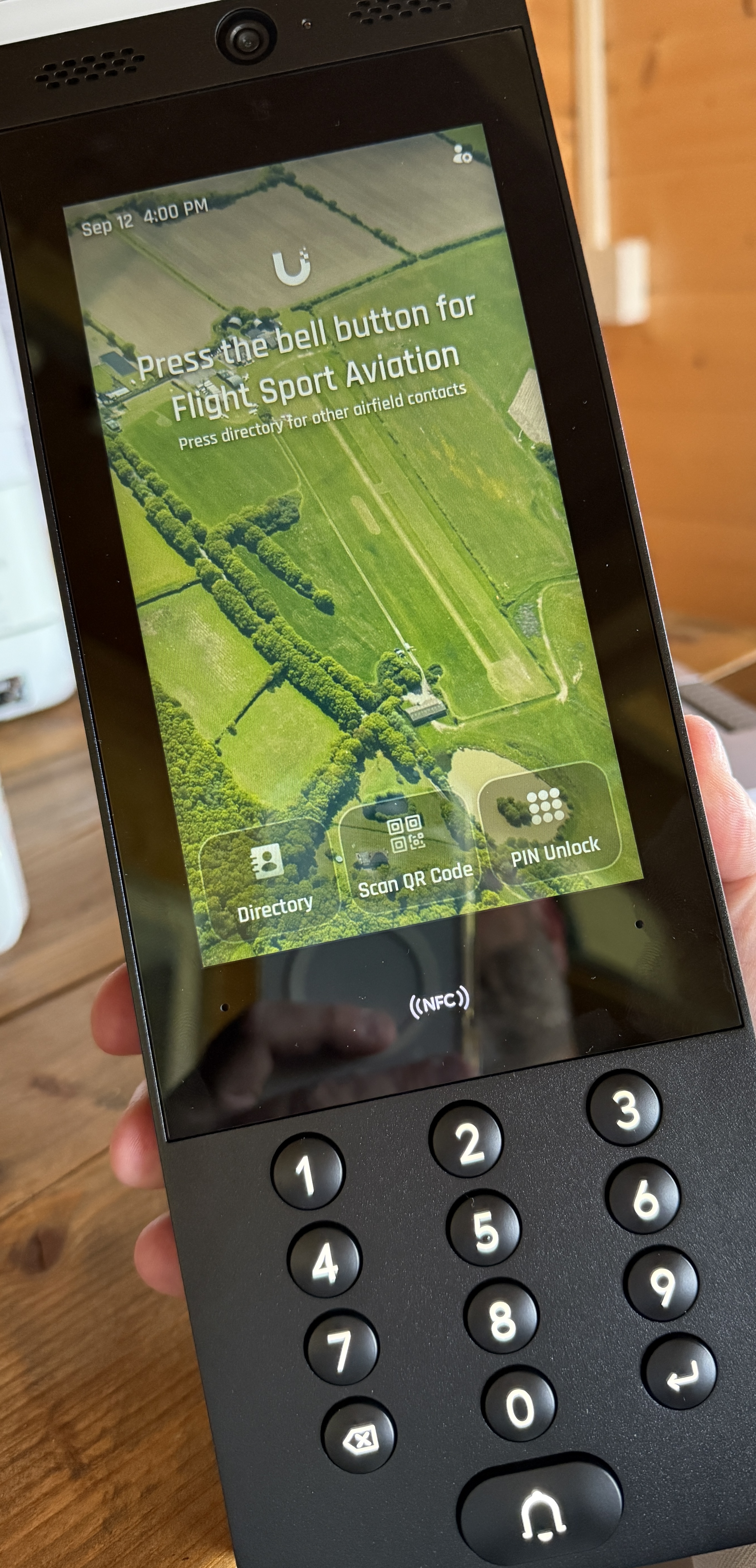
Access control integrated with the wider platform — number-plate recognition at the gate, vehicle-aware automation that opens the gate as a car approaches, selected facial recognition for specific operational use cases, and every visitor logged through the access layer rather than waved through.
Event-driven workflows that activate sirens, raise alerts and apply different rules depending on the area, the time of day and the type of object detected.
A 4G/5G backup path so alarms, detections and remote visibility keep working if the primary internet connection is lost, damaged or deliberately cut.
The on-site weather station is published out to the airfield's public website via our infrastructure, and selected camera feeds are streamed to a secure resident area so people based at Deanland can see live conditions and what's happening on the airfield.
Network, cameras, access devices, sensors and alerts visible from one console — proactive monitoring and faster diagnosis across the whole estate.
Beyond an intruder alarm
A conventional intruder alarm is built around door contacts, PIRs and movement zones. Inside a standard building those work well. Across an open, mixed-use airfield they do not — outdoor motion detection is noisy and unreliable, and a system that cries wolf often enough gets its alerts ignored.
Deanland's platform replaces that logic with AI-aware detection plus zone and time-of-day context. A person walking onto an operational area at three in the morning is not the same event as a fox crossing the grass, a car on the driveway or a shadow under a hangar light. The system can tell the difference and respond accordingly.
Detections become actions. Sirens activate when a hangar zone is breached out of hours. Different rule sets apply during the day and overnight. PTZ cameras pan automatically to the area of concern when an alarm is raised. Number-plate recognition at the gate adds vehicle context to anything that arrives.
There's a practical extension of this currently in flight. We're integrating the access platform with the flying school's booking system so that when someone books an aircraft or a training slot, the confirmation email they receive carries a time-limited PIN for the gate — valid when they arrive, expired by the time their session is over.
The point is not the individual features. The point is that everything is part of the same platform — network, cameras, access, sensors and alerts — so the whole system can decide, alert and act together rather than as a collection of disconnected products.
Managed, not just installed
A platform like this only earns its keep if somebody is looking after it. Deanland's estate sits inside M-Tech's managed service.
The on-site console gives one view of the network, cameras, access devices and alerts. Behind that, we layer additional monitoring platforms back at M-Tech — pulling telemetry from the network and the connected estate via the platform's APIs and our own integrations, and feeding it into our central monitoring and PSA.
That means a degraded link, a switch port that's gone down, an access point that's dropped off, a damaged external cable run or a camera that's stopped reporting is picked up by us — usually before anyone at the airfield notices. Tickets are opened automatically, the right engineer is alerted, and physical attendance is dispatched when the issue actually needs hands on site.
Reactive callout is still there when something demands it. But most of the work is the quieter kind — proactive monitoring, trend visibility, firmware management, configuration consistency, and catching the small things before they become operational ones.
Platform at a glance
- Operator
- Deanland Airfield — private aviation, sport flying, hangarage and visiting pilots
- Site
- dispersed East Sussex airfield with hangars, outlying buildings, gates, vehicle routes and open operational areas
- Standard
- UniFi Network, UniFi Protect and UniFi Access as one integrated platform with AI-aware detection
- Connectivity
- existing cabling reused, new external fibre runs, 60 GHz point-to-point microwave to outlying buildings
- Resilience
- cellular failover so alarms, detections and remote visibility survive loss of the primary internet connection
- Network
- VLAN-segmented switching with separate networks for CCTV, guest access, IoT, access control and operational systems
- Detection
- AI classification of people, vehicles, animals and other objects, with PTZ cameras directable on event
- Access
- number-plate recognition at the gate, vehicle-aware gate automation, selected facial recognition for specific use cases
- Alerting
- sirens, sensors and Alarm Manager rules driven by event type, location and time of day
- Public-facing services
- weather station data published to the airfield website, and selected CCTV feeds streamed to a secure resident area, all delivered over the same managed infrastructure
- Managed service
- proactive monitoring back at M-Tech via platform APIs and our central monitoring + PSA integrations — faults caught before the airfield notices, physical callout when it's genuinely needed
- Distinctive
- a dispersed working airfield treated as a single intelligent estate rather than a stack of independent products
M-Tech have brought connectivity, CCTV, access control, alarms and automation into one reliable platform. They understood the realities of a live airfield, and the result has visibly improved our visibility, security and day-to-day operation.
What changed
Visibility
A dispersed airfield estate visible from one console — network, cameras, access devices, sensors and alerts in a single view. Incidents can be inspected remotely rather than guessed at.
Smarter alerting
AI-aware detection means alerts correspond to events that actually matter. People, vehicles and animals are treated differently. False positives drop, and the alerts that do come through carry weight again.
Resilience
Cellular failover means critical alarms, detections and remote access keep working through a fixed-line outage. Hybrid fibre + microwave connectivity removes single points of failure across outlying buildings.
Scalable platform
A foundation that can grow as the airfield grows. New cameras, access points, sensors, gates or buildings slot into the same centrally managed estate — no rip-and-replace, no separate parallel system.
In numbers
- 02 / 04Wireless access points covering the airfield0
- 03 / 04Network switches0
- 04 / 0460 GHz microwave links to outlying buildings0
Cabling to cloud, on a working airfield
Networking, fibre, microwave, switching, Wi-Fi, AI CCTV, access control, gate automation, alarms, sensors, cellular backup and centralised managed support — designed, deployed and supported by one team, accountable to the same relationship.
There's a quieter version of this point worth making. As CCTV, access control, alarms and AV have all become network-attached, the discipline boundaries that used to make sense have stopped making sense.
Wi-Fi design, CCTV-over-IP and the network those cameras live on are managed-technology work, not really electrical-trade work. Cabling, switching, Wi-Fi, fibre, wireless links, cameras, access control, alarms, integrations, monitoring and the cloud platforms underneath them sit better with one accountable technology provider running the lot — rather than split between trades that historically didn't have to talk to each other.
Many providers can install cameras. Many can install Wi-Fi. Some can install access control. Fewer can stitch all of those together into a single intelligent estate that detects, decides, alerts, automates and supports real operational workflows. Deanland is what that combination looks like on a live aviation site.